Designing with Purpose: How Presentation Template - Soundness Enhances Visual Communication
In the modern landscape of digital communication, the distinction between content and design has largely evaporated. A message is only as effective as its delivery, and in professional settings, that delivery often hinges on the quality of visual aids. The Presentation Template - Soundness represents a specific approach to this challenge, offering a structured yet flexible framework designed to bridge the gap between raw data and compelling narrative. Whether utilized for a high-stakes startup pitch deck or a personal photography portfolio, the underlying architecture of this template system addresses common friction points in slide creation: consistency, scalability, and visual hierarchy.
The Architecture of Master Slides and Global Consistency
One of the primary technical advantages of utilizing a comprehensive system like the Presentation Template - Soundness is its reliance on Master Slides. For professionals who have spent hours manually adjusting font sizes or realigning logos across fifty different slides, the value of master slide architecture cannot be overstated. This feature serves as the foundational blueprint for the entire presentation.
When a template is built upon robust master slides, global changes propagate instantly. If a corporate brand guideline shifts from a specific shade of blue to teal, or if the company logo requires resizing, these adjustments can be made once at the master level rather than individually on every slide. This ensures pixel-perfect consistency throughout the deck, which is crucial for maintaining brand integrity in corporate profiles and business proposals. Furthermore, this architectural approach significantly reduces the cognitive load during the editing process, allowing creators to focus on refining their message rather than troubleshooting layout discrepancies.
Scalability Through Resizable Vector Graphics
A frequent pitfall in presentation design is the degradation of image quality when resizing elements. Raster images often become pixelated when stretched to fit full-screen backgrounds or detailed infographics. The Soundness template mitigates this issue through the inclusion of vector icons and fully resizable graphics. Because vectors are defined by mathematical equations rather than fixed pixels, they maintain crisp edges and clarity regardless of scale.
This technical characteristic is particularly relevant for users creating handcrafted infographics within PowerPoint. Data visualization often requires complex layering of shapes and icons. Having access to editable vector assets means that an infographic can be adapted for different aspect ratios or repurposed for print materials without loss of fidelity. For researchers and educators presenting dense statistical data, this ensures that charts and diagrams remain legible and professional, reinforcing the credibility of the information being presented.
Versatility Across Diverse Professional Domains
While many templates are niche-specific, the structural neutrality of the Presentation Template - Soundness allows it to function effectively across a wide spectrum of use cases. The design philosophy avoids overly aggressive stylistic choices that might pigeonhole the user, instead providing a clean canvas that adapts to the content's intent.
- Creative Agencies and Portfolios: For visual artists and agencies, the template’s picture placeholders utilize drag-and-drop functionality that respects aspect ratios while allowing for creative cropping. The minimalist aesthetic ensures that the artwork remains the focal point, with the slide design acting as a supportive frame rather than a distraction.
- Startup Pitch Decks: Investors typically review dozens of decks weekly. Clarity and flow are paramount. The 36-slide variety included in this template provides pre-structured layouts for problem statements, market analysis, team introductions, and financial projections. These slides follow established storytelling arcs that help founders organize chaotic information into a persuasive narrative.
- Corporate Reporting: In business environments, readability trumps novelty. The template offers structured layouts for quarterly reviews and internal updates that prioritize typography and whitespace. This makes dense textual information more digestible for stakeholders during meetings.
- Personal Branding: Freelancers and consultants can leverage the portfolio sections to showcase case studies. The integration of text and image placeholders allows for a balanced presentation of skills and past work, functioning as a dynamic resume.
Optimizing Workflow with Drag-and-Drop Functionality
Efficiency in presentation design is not merely about speed; it is about maintaining creative flow. Interruptions caused by technical friction can derail the thought process. The Picture Placeholder system employed in the Presentation Template - Soundness is engineered to streamline asset management. Instead of inserting an image and then spending time masking, cropping, and positioning it, users can simply drag a file directly into a designated zone.
This functionality automatically snaps the image to the predefined container, applying necessary masks and alignment rules instantly. For photographers and designers managing large volumes of visual assets, this reduces repetitive manual tasks. It also lowers the barrier to entry for non-designers. Team members without extensive graphic design training can populate slides with high-quality imagery without risking layout breakage, democratizing the design process within organizations.
The Role of Documentation in Template Adoption
A frequently overlooked component of digital assets is the accompanying documentation. Complex templates can sometimes feel opaque to new users, leading to underutilization of features. The inclusion of a dedicated Documentation File with the Presentation Template - Soundness addresses this learning curve. Effective documentation does more than explain how to change a color; it guides users through best practices for customization.
Understanding how to properly edit master slides versus individual slides, or knowing which fonts were used in the demo files, prevents common errors that degrade the final output. For teams adopting a new standard template, this documentation serves as a style guide, ensuring that everyone utilizes the asset library correctly. This educational aspect transforms the template from a static product into a sustainable design system.
Navigating Licensing and Asset Expectations
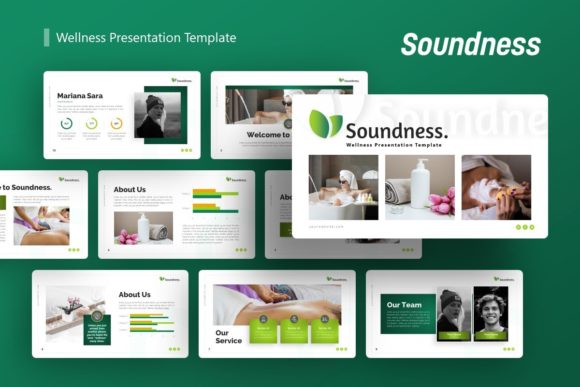
When integrating third-party templates into professional workflows, it is vital to understand the boundaries of what is included. A critical note regarding the Presentation Template - Soundness is that all images shown in the preview demos are for illustrative purposes only and are not included in the downloadable files. This is a standard industry practice rooted in copyright and licensing, but it has practical implications for the user.
Users must source their own photography and imagery. While this requires additional effort, it ultimately results in a more authentic and legally safe presentation. Using generic stock photos provided with a template can sometimes lead to brand dilution or licensing conflicts. By requiring users to insert their own assets via the drag-and-drop placeholders, the template encourages the use of original, proprietary, or properly licensed visuals. This distinction ensures that the final presentation is unique to the creator and compliant with intellectual property standards.
Strategic Considerations for Implementation
Adopting a comprehensive template system involves more than just downloading a .PPTX file; it requires a strategic approach to content adaptation. With 36 distinct slides available, there is a risk of over-inclusion. Just because a slide layout exists does not mean it belongs in every deck. Users should audit the available slides against their specific narrative goals.
For example, a startup pitch might benefit from the "Team" and "Financials" slides but may find the "Photography Grid" irrelevant. Conversely, a creative agency might ignore the data-heavy infographic slides in favor of visual showcases. The strength of the Presentation Template - Soundness lies in its modularity. It is designed to be deconstructed and reassembled based on need. Successful implementation involves selecting the subset of slides that enhances the story and discarding those that add unnecessary length or complexity.
Furthermore, users should consider the long-term maintenance of their presentations. Because the template is based on editable master slides and vector graphics, it is future-proofed against minor brand evolutions. Investing time in setting up the master slides correctly at the outset pays dividends in future iterations. When the next quarterly report or client pitch arrives, the foundational work is already complete, allowing for rapid deployment of new content within a proven visual framework.
Balancing Aesthetics with Accessibility
While the pixel-perfect illustrations and handcrafted infographics of the Soundness template are visually striking, users must also consider accessibility. High-contrast ratios, readable font sizes, and alt-text for images are essential for inclusive communication. The clean design language of this template generally supports accessibility well, as it avoids cluttered backgrounds and low-contrast text overlays. However, customization should always be checked against accessibility standards. Ensuring that the chosen color palette remains distinguishable for colorblind audiences and that animations do not trigger vestibular disorders is part of responsible presentation design. The template provides the tools for aesthetic excellence, but the user must apply them with inclusivity in mind.
Ultimately, the Presentation Template - Soundness functions as a sophisticated instrument for visual storytelling. Its value is derived not just from its 36 slides or vector icons, but from the systematic approach it brings to presentation creation. By handling the heavy lifting of layout, alignment, and consistency, it frees professionals, educators, and creators to concentrate on what truly matters: crafting a message that resonates, informs, and persuades. Whether building a corporate identity or showcasing a personal portfolio, the template offers a reliable foundation upon which impactful communication can be built.