Framework Presentation Template: A Structural Approach to Professional Visual Communication
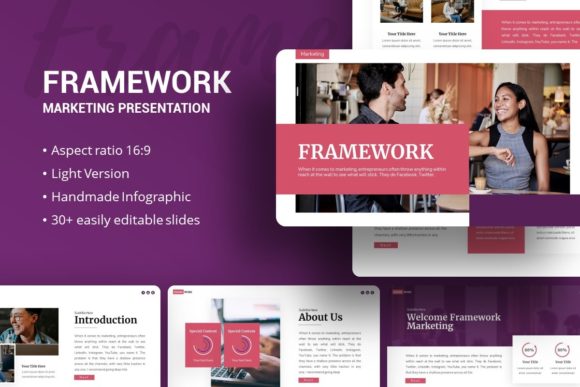
In the modern landscape of digital communication, the distinction between a generic slide deck and a strategic visual narrative often determines the success of a pitch, report, or portfolio. The Framework presentation template serves as more than a mere collection of aesthetically pleasing layouts; it functions as a comprehensive architectural system for organizing complex information. Designed to bridge the gap between creative expression and corporate structure, this resource provides a foundational methodology for professionals across diverse sectors. Understanding how to leverage such a structured template is essential for anyone looking to elevate their visual storytelling from simple data display to persuasive communication.
Architectural Versatility Across Professional Domains
The primary strength of the Framework template lies in its adaptability. While many design assets are pigeonholed into specific niches, this system is engineered with modular flexibility that supports a wide spectrum of professional identities. This versatility is not accidental but is instead a result of intentional design choices that prioritize content hierarchy over decorative excess.
Corporate Strategy and Business Profiles
For established companies and corporate entities, consistency is paramount. The template provides a unified visual language that reinforces brand identity without requiring extensive redesign for each new presentation. When utilized for company profiles or quarterly business reviews, the master slide architecture ensures that typography, color palettes, and spacing remain uniform throughout a 35-slide deck. This structural integrity signals professionalism and attention to detail, qualities that stakeholders associate with organizational competence. The ability to maintain a cohesive look across dozens of slides reduces cognitive load for the audience, allowing them to focus on strategic insights rather than formatting inconsistencies.
Creative Agencies and Portfolios
Creative professionals face a unique challenge: their presentation tool must demonstrate design capability without overshadowing the work being showcased. For agencies, photographers, and individual artists, the Framework template acts as a sophisticated gallery space. The picture placeholders are designed with aspect ratios and masking techniques that respect photographic composition and artwork integrity. Unlike rigid grids that crop images arbitrarily, these editable containers allow creators to present visual assets in their intended context. The minimalist aesthetic of the underlying framework ensures that the portfolio pieces remain the focal point, while the handcrafted infographics provide necessary context regarding project timelines, team structures, or campaign results.
Startup Pitch Decks and Investor Relations
In the high-stakes environment of startup fundraising, clarity equates to credibility. Investors review hundreds of decks annually, making structural familiarity a significant advantage. The Framework template includes specific slide types optimized for pitch narratives, including problem-solution articulations, market sizing visuals, and financial projection layouts. Because these elements are based on vector graphics and resizable components, founders can customize data visualization to reflect accurate metrics without breaking the design. The inclusion of drag-and-drop functionality allows for rapid iteration, which is critical when refining a pitch based on real-time feedback. By providing a professional scaffold, the template allows entrepreneurs to concentrate on validating their business model rather than struggling with alignment tools.
Technical Specifications and Workflow Efficiency
Beyond aesthetic application, the practical utility of a presentation template is defined by its technical construction. The Framework template distinguishes itself through features that streamline the production process for users of varying technical proficiency. These specifications transform the software from a static canvas into a dynamic workspace.
Master Slide Architecture and Global Editing
The foundation of efficient presentation design is the master slide system. This template is built entirely upon robust master slides, meaning that global changes propagate instantly across the entire deck. If a brand manager needs to update a logo placement or adjust a primary color code, they can do so once at the master level rather than editing 35 individual slides. This feature is particularly valuable for teams where multiple stakeholders contribute to a single document. It enforces design governance and prevents the "slide rot" that occurs when individual contributors apply inconsistent manual formatting. For educators and researchers who frequently update course materials or findings, this architecture significantly reduces the time spent on maintenance between semesters or publication cycles.
Vector-Based Infographics and Scalability
Data visualization is often the weakest link in amateur presentations, where charts appear pixelated or disconnected from the overall theme. The Framework template addresses this through handcrafted, vector-based infographics. Because these elements are native vectors within PowerPoint, they remain crisp at any zoom level or projection size. More importantly, they are fully editable. Users are not locked into static images; they can modify chart values, recolor segments to match specific datasets, and resize elements to fit unique content requirements. This capability transforms infographics from decorative filler into accurate analytical tools. Whether displaying user growth for a SaaS product or demographic breakdowns for academic research, the vector foundation ensures that visual representations remain precise and professional.
Asset Management and File Integrity
The package includes comprehensive documentation and organized file structures that facilitate long-term asset management. The inclusion of vector icon sets eliminates the need to source external graphics, reducing licensing risks and style mismatches. Furthermore, the clear separation of preview imagery from actual template files manages user expectations and prevents confusion regarding intellectual property. Understanding that demo images are for illustrative purposes only helps users approach the template as a structural tool rather than a finished product. This mindset shift encourages customization and personalization, leading to more authentic and effective final outputs.
Strategic Implementation for Diverse Audiences
Adopting a structured template like Framework requires a shift in workflow. Rather than starting with a blank slide and adding content piecemeal, effective implementation begins with content mapping. Professionals should first outline their narrative arc before selecting specific slides from the 35-slide library. This reverse-engineering approach ensures that the design serves the message.
For hobbyists and students, the template offers an educational opportunity in professional design standards. By working within a pre-established grid system and typographic hierarchy, users develop an intuitive understanding of whitespace, contrast, and visual flow. These skills are transferable beyond PowerPoint, informing better document design, social media graphics, and personal branding efforts. The template acts as a mentorship tool, embedding best practices directly into the creation process.
Researchers and academics benefit from the template’s capacity to organize dense information. The structured layouts force a distillation of complex ideas into digestible visual chunks. Instead of walls of text, the framework encourages the use of segmented lists, comparative matrices, and process diagrams. This not only improves audience retention during lectures or conferences but also aids the researcher in clarifying their own thinking. The discipline required to fit content into a well-designed slide often reveals gaps in logic or opportunities for simplification that might otherwise go unnoticed.
Evaluating Design Systems for Long-Term Value
When selecting a presentation resource, it is crucial to distinguish between trendy aesthetics and sustainable design systems. The Framework template exemplifies the latter by prioritizing usability over novelty. Trends fade, but structural clarity remains relevant. A template that relies heavily on current visual fads may require replacement within months, whereas a system based on fundamental design principles can serve as a reliable asset for years.
The value proposition extends to collaboration. In team environments, a shared template reduces friction. New team members can onboard quickly by using the documented master slides, and cross-departmental projects maintain visual coherence even when assembled by different individuals. This operational efficiency translates directly to cost savings and improved communication quality. For freelancers and consultants, delivering work in a polished, consistent format enhances perceived value and justifies premium pricing. The template becomes part of the service delivery infrastructure, signaling reliability and professionalism to clients.
Ultimately, the effectiveness of the Framework presentation template depends on the user's willingness to engage with its structural capabilities. It is not a magic solution that generates compelling content automatically, but rather a precision instrument that amplifies the impact of well-crafted ideas. By leveraging its master slide architecture, vector scalability, and domain-agnostic versatility, professionals can create presentations that are not only visually impressive but strategically sound. In an era where attention is scarce and competition is fierce, such structural advantages are not merely optional enhancements; they are fundamental components of successful visual communication.