Presentation Template - Westside: A Strategic Framework for Professional Communication
In the landscape of modern business communication, the visual vehicle you choose is as critical as the narrative you construct. The Presentation Template - Westside serves as more than a mere collection of slides; it functions as a structured design system intended to elevate how information is organized, perceived, and retained. For professionals ranging from startup founders to creative directors, this template offers a pre-validated aesthetic foundation that reduces cognitive load during the creation process. By leveraging a tool like Introducing Westside Environment Presentation, decision-makers can shift their focus from pixel-pushing to strategic storytelling, ensuring that the medium supports rather than distracts from the message.
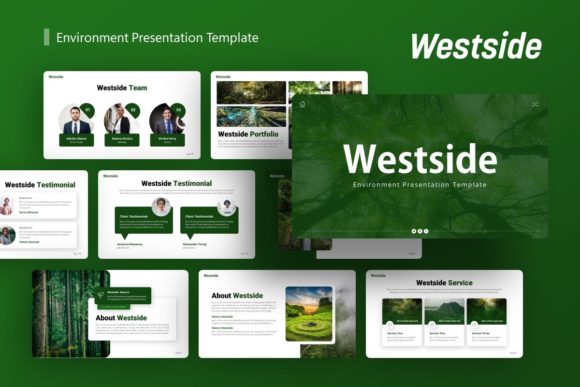
The strategic utility of this template lies in its versatility and technical architecture. Designed with 36 distinct slides per template, it provides sufficient variety to handle complex narratives without forcing content into ill-fitting layouts. Whether utilized for a Creative Agency pitch, a Corporate Company Profile, or a Personal Portfolio, the underlying Master Slide structure ensures global consistency. This consistency is vital for branding; it allows teams to maintain visual integrity across different departments and use cases while still permitting individual customization. When evaluating presentation assets, one must look beyond surface-level aesthetics to understand how the file’s architecture supports long-term operational efficiency and brand positioning.
Aligning Design Assets with Business Objectives
Selecting a presentation asset should be a deliberate business decision aligned with specific organizational goals. The Presentation Template - Westside is particularly effective when the objective is to convey professionalism alongside creativity. For startups preparing a Pitch Deck, the handcrafted infographics included in the package serve a dual purpose: they visualize data clearly while signaling that the company pays attention to detail. In investor relations, this level of polish can subconsciously reinforce perceptions of competence and maturity. Similarly, for photographers or artists building a portfolio, the pixel-perfect illustrations and resizable graphics provide a neutral yet sophisticated backdrop that highlights the work itself rather than competing with it.
However, possessing the template does not guarantee success. Strategic application requires mapping the 36 available slide options to your specific communication hierarchy before opening PowerPoint. A common failure mode is selecting slides based solely on visual appeal rather than functional necessity. If your goal is to explain a complex operational workflow, prioritize the infographic-heavy slides over the image-dominant ones. Conversely, if the aim is emotional connection in a personal portfolio, leverage the picture placeholders and minimalist layouts. Intentionality in slide selection prevents the presentation from becoming a disjointed collection of attractive but irrelevant visuals. The template is a toolkit, not a script; its value is realized only when wielded with clear intent.
Operational Efficiency and Brand Consistency
One of the most tangible benefits of adopting a comprehensive system like the Westside template is the reduction in production time and the mitigation of brand drift. In many organizations, presentations are created ad hoc, leading to inconsistent fonts, clashing color palettes, and misaligned messaging. Because this template is based on Master Slides, changes made at the master level propagate instantly across the deck. This feature is invaluable for marketing managers and educators who need to update branding or core information across multiple presentations simultaneously. It transforms presentation creation from a bespoke design project into a scalable content operation.
The inclusion of editable vector icons and fully resizable graphics further enhances productivity. Teams no longer need to source external assets or worry about resolution loss when projecting onto large screens or converting to PDF. The drag-and-drop picture placeholders streamline the population of visual content, allowing non-designers to produce high-quality outputs independently. This democratization of design capability is crucial for small business owners and freelancers who lack dedicated design resources. By standardizing the visual framework, you free up mental bandwidth to focus on refining the argument, validating the data, and rehearsing the delivery. The efficiency gained here compounds over time, allowing for faster iteration cycles and more responsive communication strategies.
Risks of Template Dependency and Mitigation Strategies
While the Presentation Template - Westside offers significant advantages, relying on it without critical oversight introduces specific risks. The primary danger is genericness. Because templates are designed for broad appeal, there is a risk that your Pitch Deck or Company Profile may inadvertently resemble others using the same asset. To mitigate this, treat the template as a starting point, not a finish line. Customize the color palette to match your exact brand guidelines rather than using the default scheme. Rewrite placeholder text entirely; never leave demo content visible, as this signals a lack of care and preparation. The note regarding preview images serves as a reminder: the value is in the structure, not the stock photography. You must inject your unique intellectual property into the framework to differentiate your output.
Another risk involves structural rigidity. Users sometimes feel compelled to use all 36 slides or force content into a specific layout because it looks impressive. This leads to bloated decks and diluted messaging. Strategic discipline requires the willingness to delete slides. If a handcrafted infographic does not clarify your point, remove it. If a transition slide adds no value, cut it. The goal is clarity, not volume. Furthermore, ensure that the template’s tone matches your audience’s expectations. A highly stylized creative agency template might feel inappropriate for a conservative financial audit report. Always validate the template’s aesthetic against the cultural context of your stakeholders before committing to the format. Contextual awareness is the safeguard against stylistic mismatches.
Practical Implementation for Diverse Use Cases
Different professional scenarios demand different approaches to utilizing the Westside environment. For a Creative Agency, the template should be used to showcase process and case studies. Utilize the portfolio-specific slides to create a rhythm between problem, solution, and result. The resizable graphics allow for flexible display of campaign assets, while the clean typography ensures readability of detailed copy. For a Startup Pitch Deck, focus heavily on the data visualization slides. Investors scan for metrics; use the handcrafted infographics to make TAM, SAM, and SOM data immediately digestible. Keep text minimal and use the picture placeholders for product screenshots or team photos to build trust.
In a Corporate or Business context, the template excels in internal reporting and stakeholder updates. Here, the Master Slide functionality is paramount for maintaining departmental alignment. Use the consistent layout to create a recognizable internal reporting standard, making it easier for executives to compare quarter-over-quarter performance. For Educators and Trainers, the variety of slides supports different pedagogical modes—lecture, discussion, activity, and summary. The visual consistency helps learners orient themselves within the lesson structure. Finally, for Personal Portfolios, the template acts as a digital gallery. Prioritize negative space and image quality. The documentation file included with the download is an essential resource here; reviewing it ensures you understand how to manipulate the master elements safely, preventing accidental corruption of the layout while customizing it to reflect your personal brand identity.
Making Informed Decisions on Visual Assets
Ultimately, the decision to adopt the Presentation Template - Westside should be grounded in a realistic assessment of your current capabilities and needs. If your team struggles with design consistency or spends excessive time formatting slides, this asset offers a high return on investment. It bridges the gap between amateur output and professional agency standards without the recurring cost of custom design services. However, if your communication needs are highly specialized or regulated, verify that the template’s flexibility accommodates your compliance requirements before purchase.
Consider the long-term lifecycle of the file. Will this template remain relevant as your brand evolves? The editable nature of the vectors and masters suggests longevity, provided you maintain good file hygiene. Document any customizations you make to the master slides so future team members can replicate them. Treat the template as living intellectual property. By approaching the Westside template with strategic foresight, operational discipline, and a commitment to customization, you transform a static digital product into a dynamic engine for clearer communication and better business outcomes. The tool facilitates the work, but your strategic vision determines its impact.