Grocery Icon: Essential Line Art for Modern Design
In the fast-paced world of digital design and branding, clarity is everything. Whether you are building a mobile app for food delivery or designing packaging for an organic market, visual communication needs to be instant and intuitive. This is where a high-quality grocery icon becomes indispensable. Far more than just a simple picture of a shopping cart or an apple, these line style symbols serve as the foundational language between your brand and your audience. They bridge the gap between complex functionality and user understanding, turning abstract concepts into recognizable actions.
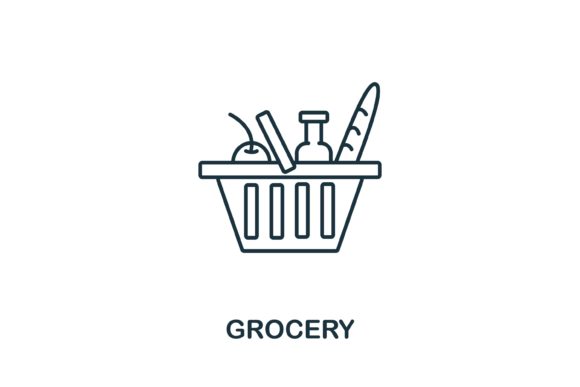
When we talk about a grocery icon in a professional context, we are referring to a versatile creative element designed specifically for logos, infographics, UX, and UI environments. These are not clip-art afterthoughts; they are carefully crafted vector graphics that maintain their integrity across every medium. From the smallest favicon on a browser tab to large-scale billboard advertising, the right symbol ensures your message remains crisp and effective. For designers, marketers, and business owners, having access to editable EPS and JPG files means you can adapt these assets to fit any project without compromising quality.
The Practical Value of Line Style Symbols
You might wonder why line art is so prevalent in modern shopping icon collections. The answer lies in cognitive load and scalability. Solid, filled icons can sometimes feel heavy or aggressive, especially when used in dense interfaces like e-commerce dashboards or recipe apps. Line style symbols offer a lighter, more approachable aesthetic that guides the eye without overwhelming it. This minimalism is crucial for user experience (UX) design, where screen real estate is precious and clarity dictates conversion rates.
Furthermore, line-based grocery icons are inherently flexible. Because they rely on strokes rather than complex fills, they are significantly easier to edit. If your brand guidelines require a specific stroke weight or corner radius, an EPS file allows you to adjust these parameters globally in seconds. This level of customization ensures that your shopping bag or produce symbol feels like a native part of your design system rather than a generic sticker pasted onto a layout. For freelancers and agencies managing multiple clients, this efficiency translates directly to faster turnaround times and more cohesive deliverables.
Applications Across Digital and Print Media
The versatility of a well-designed grocery icon extends far beyond a single use case. Understanding where and how to deploy these assets can elevate projects across various industries:
- User Interface Navigation: In mobile apps and websites, these symbols act as anchors for navigation bars. A clean outline of a basket or cart instantly tells users where to review their purchases, reducing friction in the checkout process.
- Brand Identity and Logos: Many startups in the food tech and sustainable living spaces use stylized grocery elements as their primary logomark. The simplicity of line art makes it memorable and easy to reproduce on merchandise, business cards, and social media avatars.
- Educational Infographics: When explaining supply chains, nutritional data, or recycling processes, text-heavy slides lose engagement. Integrating consistent iconography breaks up information into digestible chunks, making complex data accessible to broader audiences.
- Environmental Signage: Physical retail spaces benefit from clear wayfinding. Vector graphics scale infinitely, meaning the same file used for a website header can be blown up for store aisle markers or window decals without pixelation.
- Marketing Collateral: Email newsletters, blog posts, and ad creatives often need visual interest to support copy. A thematic icon set creates visual rhythm and reinforces the topic without requiring custom illustration for every campaign.
Technical Considerations for Beginners and Pros
Selecting the right asset involves more than just liking the way it looks. You must consider the technical foundation to ensure long-term usability. When you acquire a grocery icon package that includes both EPS and JPG files, you are securing two distinct advantages. The JPG serves as an immediate preview or quick placeholder for low-fidelity wireframes. However, the EPS file is your production master. It is a vector format, meaning it is mathematically defined rather than pixel-based. This allows for infinite resizing and color manipulation without degradation.
For those new to vector editing, it is important to verify that the files are truly editable. Some marketplaces sell "vectors" that are actually raster images embedded within an EPS container. Genuine vector grocery icons will have editable anchor points and paths. This distinction matters because you may need to combine a shopping cart symbol with a leaf motif to create a unique eco-friendly badge. If the paths are closed and clean, this combination takes minutes. If they are flattened or traced poorly, you will spend hours redrawing them manually.
Consistency is another critical factor. If you are using a grocery icon for a logo, it should visually align with other symbols in your ecosystem. Check the stroke width, corner rounding, and optical sizing against your existing library. Mixing thick, rounded icons with thin, sharp ones creates visual dissonance that subconsciously signals unprofessionalism to users. Most premium shopping icon collections provide style guides or metadata indicating these specifications, helping you maintain harmony across your entire visual suite.
Solving Real-World Design Challenges
Beyond aesthetics, these creative elements solve tangible business problems. Consider a small business owner launching a local delivery service. Budget constraints likely prevent hiring a bespoke illustrator for every touchpoint. A comprehensive grocery icon collection provides a cost-effective alternative that still looks polished and proprietary. By customizing the color palette and perhaps modifying minor details in the EPS file, they achieve a branded look at a fraction of custom development costs.
Educators and content creators face similar challenges when trying to make materials engaging. Visual learners retain information better when abstract concepts are anchored by familiar imagery. Using a standardized set of symbols for categories like "dairy," "produce," or "checkout" creates a mental framework that aids comprehension. This is particularly valuable in multilingual contexts where icons transcend language barriers, allowing your infographic or app interface to serve a global audience without extensive translation.
Ultimately, the goal of incorporating a grocery icon into your workflow is to enhance communication efficiency. Whether you are a seasoned art director refining a major retail rebrand or a hobbyist designing labels for homemade jams, the principles remain the same. Prioritize clarity, ensure technical compatibility, and choose assets that offer the flexibility to grow with your project. By treating these symbols as strategic tools rather than mere decoration, you unlock their full potential to inform, guide, and delight your audience.