Deportation App Page Screen Bundle: Designing Clarity in Legal Tech Interfaces
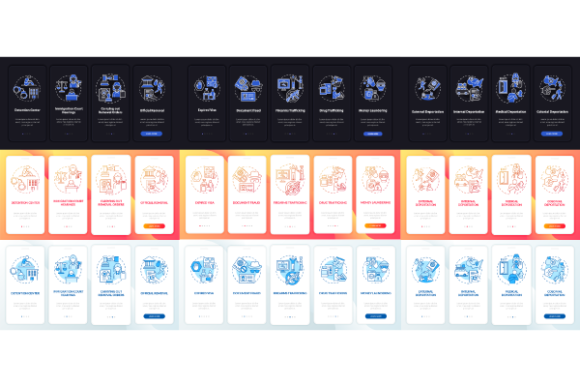
Navigating immigration and legal proceedings through digital interfaces requires a level of precision and empathy rarely found in standard consumer applications. The Deportation App Page Screen Bundle addresses this specific niche by providing designers and developers with pre-structured, compliant, and user-centric templates tailored for high-stakes environments. Unlike generic UI kits, this bundle focuses on the critical intersection of legal compliance and user experience, offering a comprehensive suite of screens designed specifically for deportation defense, case management, and official processing walkthroughs.
In an era where legal technology is rapidly shifting from desktop-heavy portals to mobile-first accessibility, having specialized assets is no longer a luxury but a necessity. This bundle serves as a foundational resource for creating applications that guide vulnerable users through complex bureaucratic processes without adding cognitive load. By utilizing vector-based templates with linear color illustrations, teams can prototype and deploy solutions that communicate trust, clarity, and procedural accuracy.
The Evolution of Legal UX and Mobile Accessibility
Historically, immigration and deportation defense tools were relegated to clunky web forms or paper-based tracking systems. However, changing demographics and the ubiquity of smartphones have fundamentally altered how individuals access legal aid. Users in crisis situations often rely solely on mobile devices to manage their cases, communicate with counsel, and track hearing dates. This shift has created a demand for the Deportation onboarding mobile app page screen bundle, which prioritizes immediate comprehension over aesthetic flair.
Modern workflows in legal tech now emphasize "trauma-informed design." This approach recognizes that users interacting with deportation-related software are likely experiencing significant stress. Consequently, interface elements must be calming yet authoritative. The evolution of these design standards means that buttons, navigation bars, and data entry fields are no longer just functional components; they are part of a support ecosystem. Designers using this bundle are not merely arranging pixels; they are structuring information architecture that reduces anxiety and prevents costly errors during case filing or status checks.
Bridging the Gap Between Complex Law and Simple UI
One of the primary challenges in this sector is translating dense legal requirements into digestible mobile interactions. The official processing walkthrough steps graphic instructions with concepts included in this bundle solve this translation problem visually. Rather than forcing users to read paragraphs of regulatory text, these graphics break down procedures into sequential, understandable actions.
This visual scaffolding is essential for several reasons:
- Cognitive Offloading: Visual steps reduce the mental effort required to understand multi-stage legal processes.
- Language Agnosticism: High-quality linear illustrations can convey meaning across language barriers, serving as a universal guide before localization occurs.
- Error Reduction: Clear graphical cues minimize the risk of users skipping mandatory steps or misinterpreting form requirements.
- Trust Building: Professional, consistent iconography signals legitimacy and security to users wary of scams or misinformation.
By integrating these pre-designed walkthrough concepts, development teams can ensure that the educational aspect of the app is baked into the core user journey rather than treated as an afterthought.
Technical Versatility Across File Formats
A significant advantage of professional UI bundles lies in their adaptability across different stages of the product development lifecycle. The product file formats EPS, SVG, PNG, JPEG, AI ensure that assets remain crisp and editable whether they are being used for rapid prototyping, stakeholder presentations, or final production code. Vector formats like SVG and AI allow designers to scale illustrations infinitely without loss of quality, which is crucial when designing for diverse screen densities ranging from budget Android devices to high-resolution tablets.
The inclusion of multiple formats also supports cross-functional collaboration. Marketing teams can utilize high-resolution PNG and JPEG exports for brochures, infographic templates, and app store screenshots without needing access to source design files. Meanwhile, product designers retain full editability in Adobe Illustrator (AI) or compatible vector tools to customize colors, stroke weights, and composition. This interoperability streamlines the handoff process and ensures brand consistency across all touchpoints, from the internal dashboard to the public-facing promotional materials.
Linear Color Illustrations and Visual Hierarchy
The choice of linear color illustrations in this bundle is a deliberate UX decision. In legal and government contexts, heavy gradients or overly playful 3D renders can feel inappropriate or distracting. Linear art strikes a balance between modern aesthetics and serious utility. It provides enough visual interest to engage users while maintaining a clean, uncluttered interface that directs focus to actionable content.
These illustrations serve as semantic anchors within the GUI. For example, a specific line-art style might denote "document submission," while another represents "court appearance." Establishing this visual vocabulary early in the onboarding process helps users build a mental model of the application. When applied consistently throughout the UI, UX, GUI vector template system, these icons create a rhythm that guides the eye and reinforces learning. This consistency is particularly vital in deportation apps, where predictability equates to safety and reliability for the end-user.
Practical Applications for Creators and Agencies
For freelancers, agencies, and in-house teams, time-to-market is often constrained by budget and resources. Building a specialized legal interface from scratch requires extensive research into compliance standards and user needs. Leveraging a dedicated bundle accelerates this phase significantly. Instead of spending weeks defining basic screen patterns, teams can start with validated structures and focus their energy on customization and backend integration.
Beyond the screens themselves, the ability to create icons, brochure infographic templates, mobile app screen pages and more from a single cohesive asset library offers immense value. Consider a scenario where a non-profit organization needs to launch both a client portal and a donor awareness campaign simultaneously. Using matching visual assets ensures that the marketing collateral feels intrinsically linked to the product experience. This holistic approach strengthens brand recognition and communicates professionalism to stakeholders who may be evaluating the efficacy of the legal tech solution.
Customization and Ethical Design Considerations
While templates provide a starting point, ethical design in the deportation space demands localization and contextual adaptation. Users should view this bundle as a robust skeleton rather than a finished body. Colors should be tested for cultural appropriateness and accessibility contrast ratios. Iconography must be vetted to ensure it does not carry unintended negative connotations in specific communities. Text placeholders should be replaced with plain-language copy that has been reviewed by legal experts and community advocates.
The true power of the Deportation App Page Screen Bundle emerges when it is treated as a collaborative tool. Designers should use these assets to facilitate conversations with lawyers, caseworkers, and individuals with lived experience. Showing a tangible screen mockup often elicits more specific feedback than abstract wireframes. Does this step look intimidating? Is this icon confusing? Does this color scheme feel clinical or supportive? These are the questions that transform a generic template into a lifeline.
Staying Current in a Specialized Niche
Legal technology and immigration policies are not static; they evolve constantly. New regulations change form requirements, and shifting user expectations redefine what constitutes a "good" digital experience. Relying on outdated design patterns can inadvertently signal obsolescence or unreliability. Staying updated with fresh resources is therefore a professional imperative for anyone working in this field.
We recognize that designers and developers need continuous access to relevant, high-quality assets that reflect current standards. That is why we offer new topics and discounts every week. Our library expands beyond deportation interfaces to include adjacent categories such as asylum intake, visa tracking, and community resource mapping. Each new release is crafted with the same attention to detail, accessibility, and technical versatility found in our core bundles.
To maintain a competitive edge and ensure your projects remain aligned with best practices, we encourage you to subscribe on BSD Studio to be updated. Subscribers gain early access to new collections, exclusive pricing, and insights into emerging trends in legal UX. Whether you are building a minimum viable product for a startup or refining an enterprise-grade government platform, having a reliable source of specialized design assets allows you to focus on what matters most: creating technology that serves people with dignity and efficiency.
Ultimately, the goal of any deportation or legal aid application is to empower users during a period of profound uncertainty. By utilizing professional, thoughtfully constructed resources like the Deportation App Page Screen Bundle, creators can elevate the standard of digital advocacy. Good design in this context is not about decoration; it is about removing friction, clarifying complexity, and providing a stable digital foundation for those navigating one of life’s most challenging journeys. Investing in the right tools is the first step toward building software that truly makes a difference.